Stéphanie Andrade
Game Designer/ Programmer

BSc in Computer Science, with professional experience in systems programming.
Studied Game Design at Futuregames Warsaw (CD Projekt RED Scholarship recipient).Focus on technical & system design, with a versatile approach to development.
I also create social games for friends, including card games and LARP experiences.Regular participant in game jams, using them to explore and prototype ideas quickly.
Passionate gamer, especially into deck-building, racing, city management, and strategy games.Welcome to my portfolio!
Portfolio
Released Games
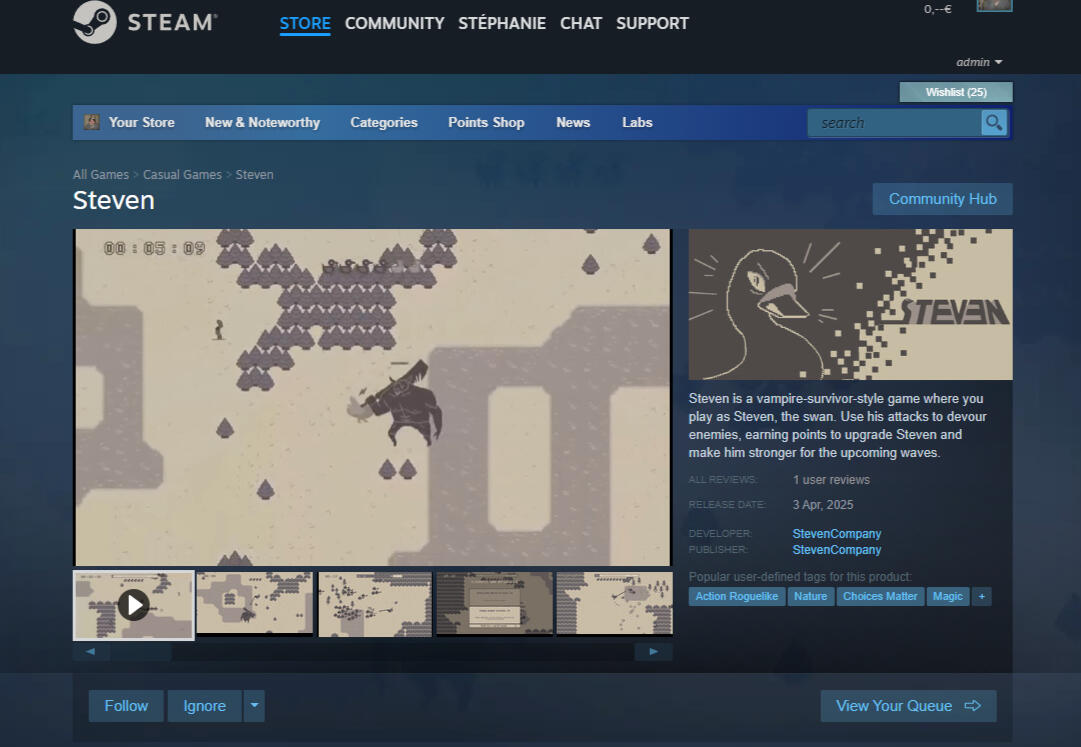
Steven
Description
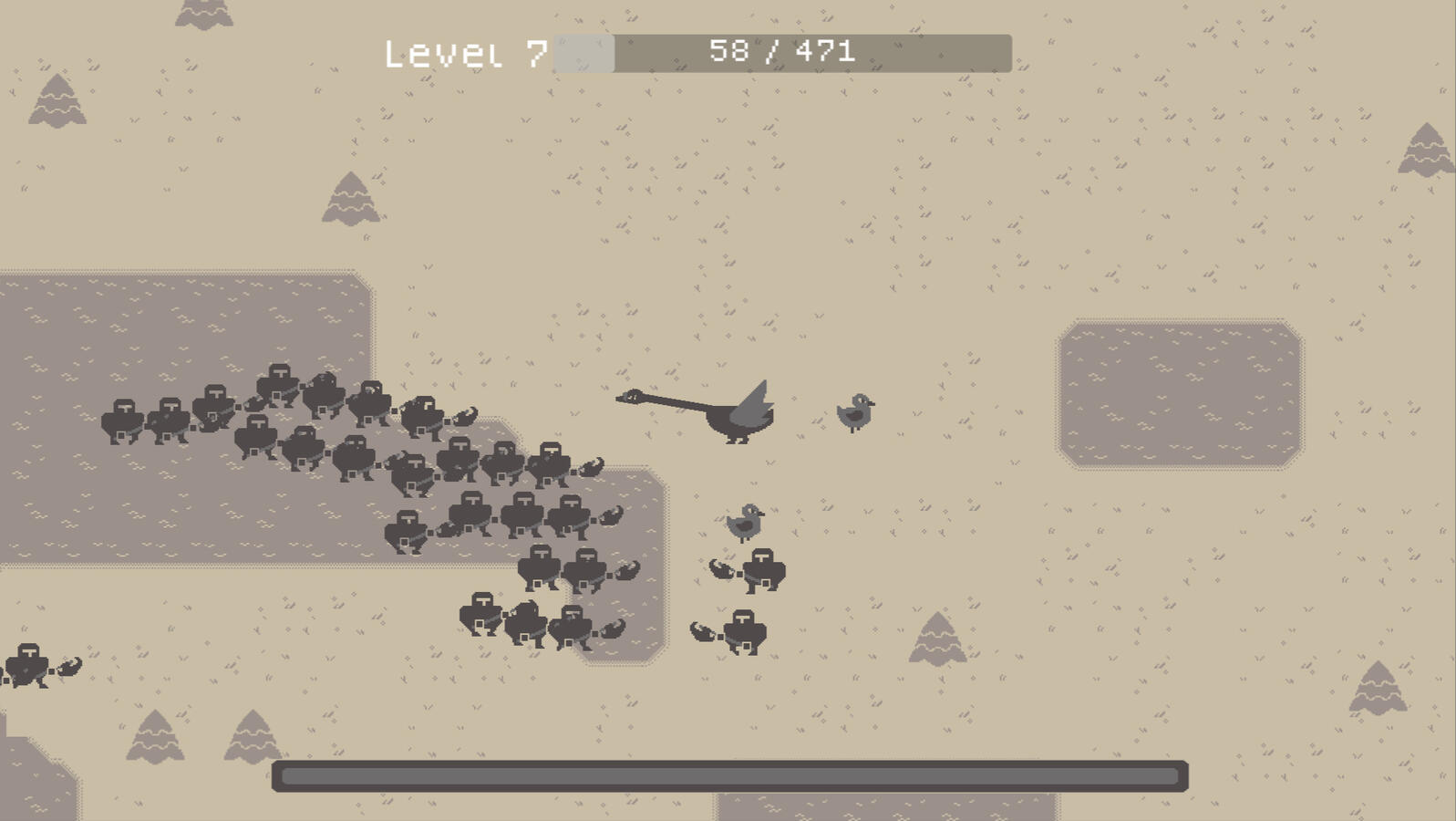
Game for Jame Gam #35"Steven" is about a little teen swan who is being chased by knights, as he is viewed as a strong enemy of the kingdom, a boss to be defeated.
You play as Steven having to kill the knights to be free.
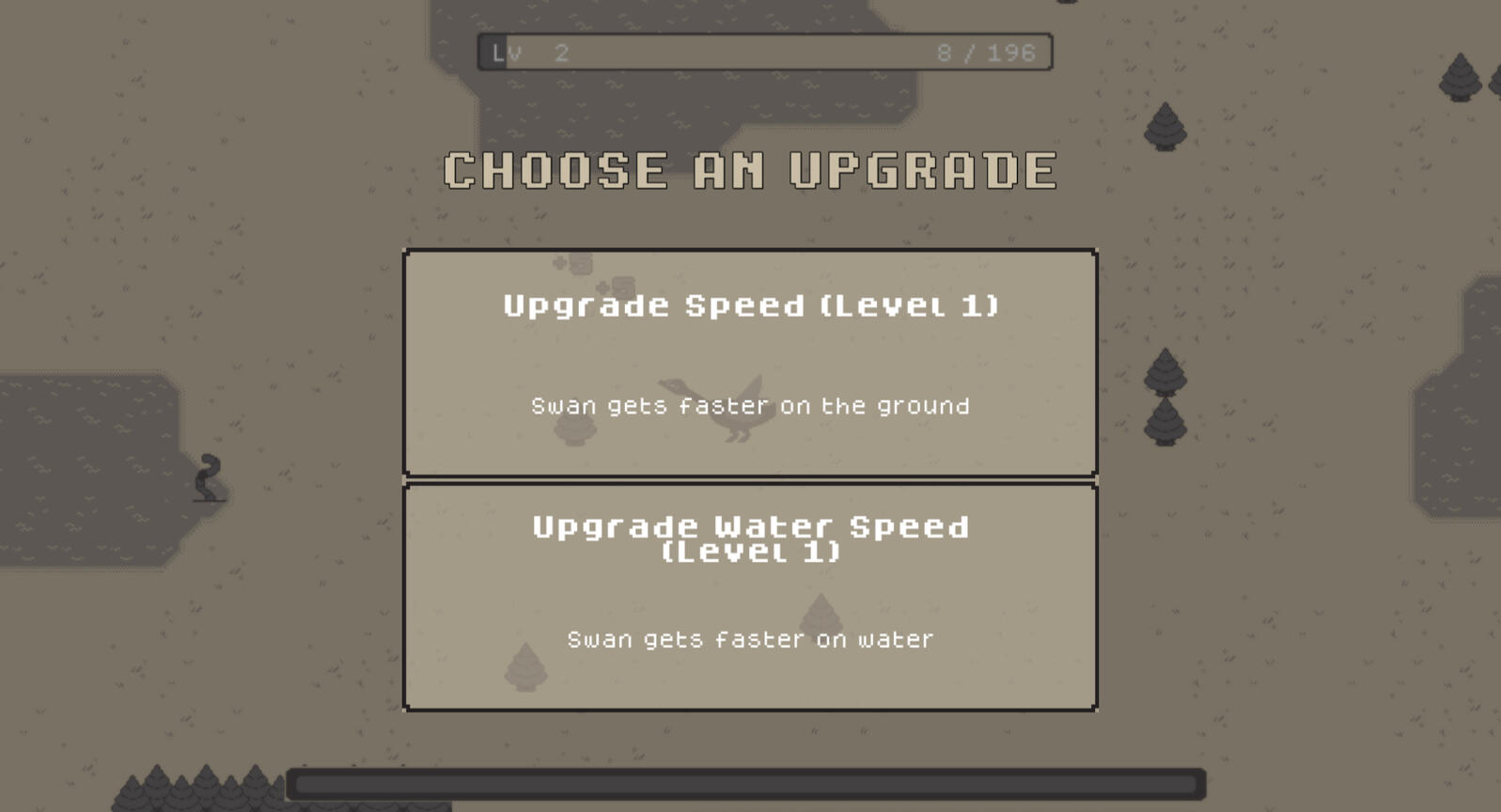
You get experience points that increase your level and at the end of each level you can choose an upgrade that makes you faster, makes your neck longer, or unlocks a pickup.Released on Steam after polishing. Play it now!!
Roles
Gameplay Designer
I designed and iterated on the core gameplay experience of a 2D action game, focusing on combat feel, player progression, and moment-to-moment decision making.
Core Combat & Player Mechanics
Designed the aiming, attack, and movement systems, focusing on responsiveness and satisfying player feedback
Tuned movement speed, attack timing, and hit feedback to create a tight and reactive combat feel
Iterated on mechanics through playtesting to balance risk vs reward in combat scenarios
Enemies & Encounter Design
Designed and implemented two enemy archetypes (melee and ranged) with distinct behaviors and pressure patterns
Created a boss encounter with unique mechanics to test player mastery of core systems
Focused on enemy design that promotes positioning, timing, and player decision-making
Progression & Upgrade Systems
Designed a system of 20 player upgrades affecting speed, range, and resource collection
Structured upgrades to support different playstyles and build experimentation
Balanced progression to maintain engagement and a sense of power growth over time
Level & Game Flow Design
Designed the game level to support combat pacing and player navigation
Controlled difficulty through enemy placement and encounter flow
Ensured a consistent gameplay loop of exploration → combat → reward
UX/UI & Player Feedback
Designed UX/UI elements to clearly communicate player state, upgrades, and combat feedback
Focused on readability and clarity to support fast-paced gameplay decisions
Programmer
I did the implementation of the game in Godot 4.
Game Projects

Yori
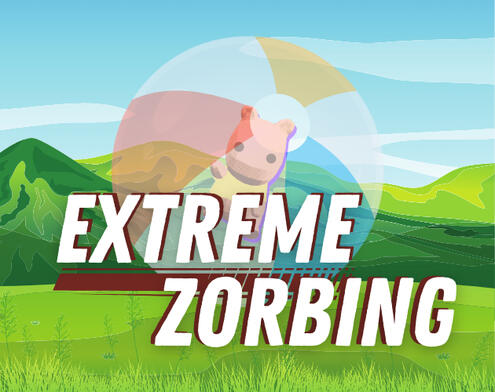
Extreme zorbing
Harbingers of New Dawn
Yori
Description
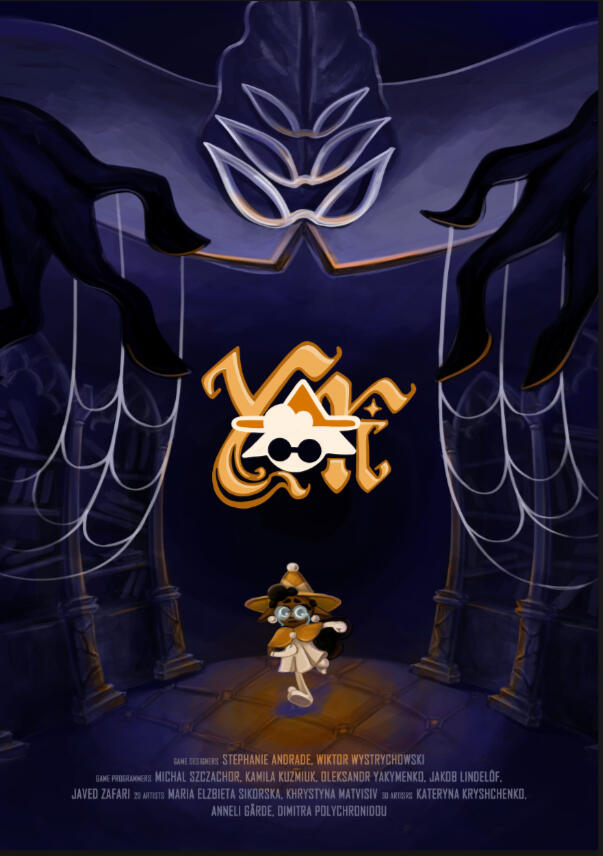
Game project 1 in FuturegamesYori is an immersive, single player game set in a magical world of wizards and witches. Players explore the deserted halls of an eerie magical school through the eyes of sleepy Yori, the student who overslept and is trying to make it to class on time. Strategize to make your way past the spidery librarian while managing your stress meter. Collect books spread out around the map without getting caught. Can you make it to class in time?
Roles
Product Owner
As a product owner, I worked on listening to the team, organizing and distributing tasks, and making sure the communication between team members flowed.
Lead Designer
Created and maintained game design documentation for core systems and features
Designed and iterated on gameplay mechanics (movement, interactions, stress system), focusing on player experience and balance
Contributed to level design, UX/UI, and audio, ensuring cohesion with the overall gameplay vision
Project Background
Theme: Move slowly
3 Weeks
12 People
Made in Unity
Extreme Zorbing
Description
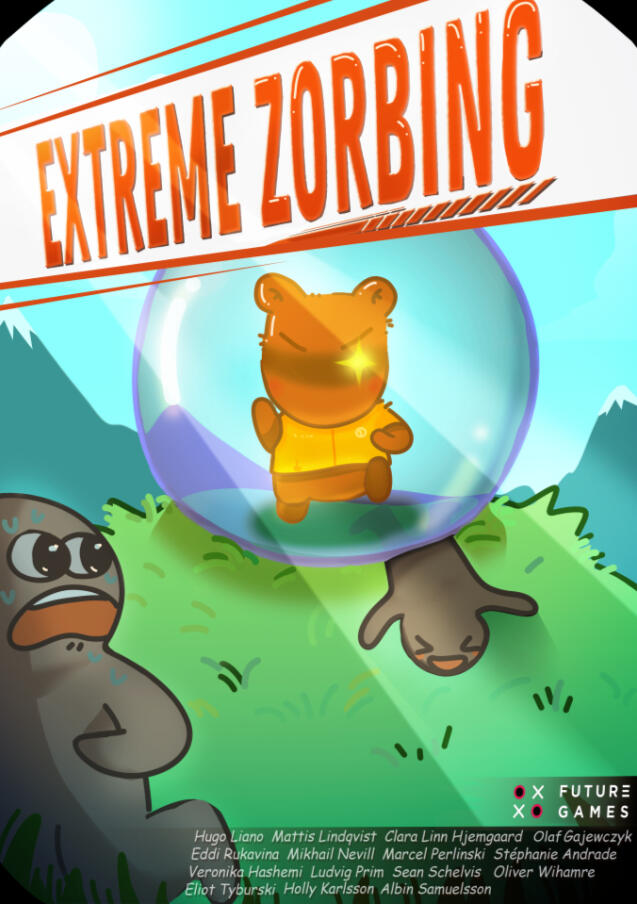
Game project 2 in FuturegamesExtreme Zorbing is a fun, fast-paced mobile game based on the real-life sport of zorbing, where you race down a hill in a giant plastic ball. Sound easy?Don’t forget about your competition! Maneuver around traps and obstacles, while avoiding being bumped off course by the other zorbers. In addition, there are people on the field. Rolling over anyone in the other teams' colors will give you a speed boost, but hitting one of your own will slow you down!
Roles
Product Owner
As a product owner, I worked on listening to the team, organizing and distributing tasks, and making sure the communication between team members flowed.
Game Designer
Designed and refined movement mechanics and core gameplay loop, focusing on responsiveness and player feel
Iterated on gameplay through testing to improve control and moment-to-moment experience
Led overall game direction, ensuring consistency in gameplay vision
Project Background
Category: Extreme sport, mobile, coop.
4 weeks
16 People
Made in Unity
Harbingers of New Dawn
Description
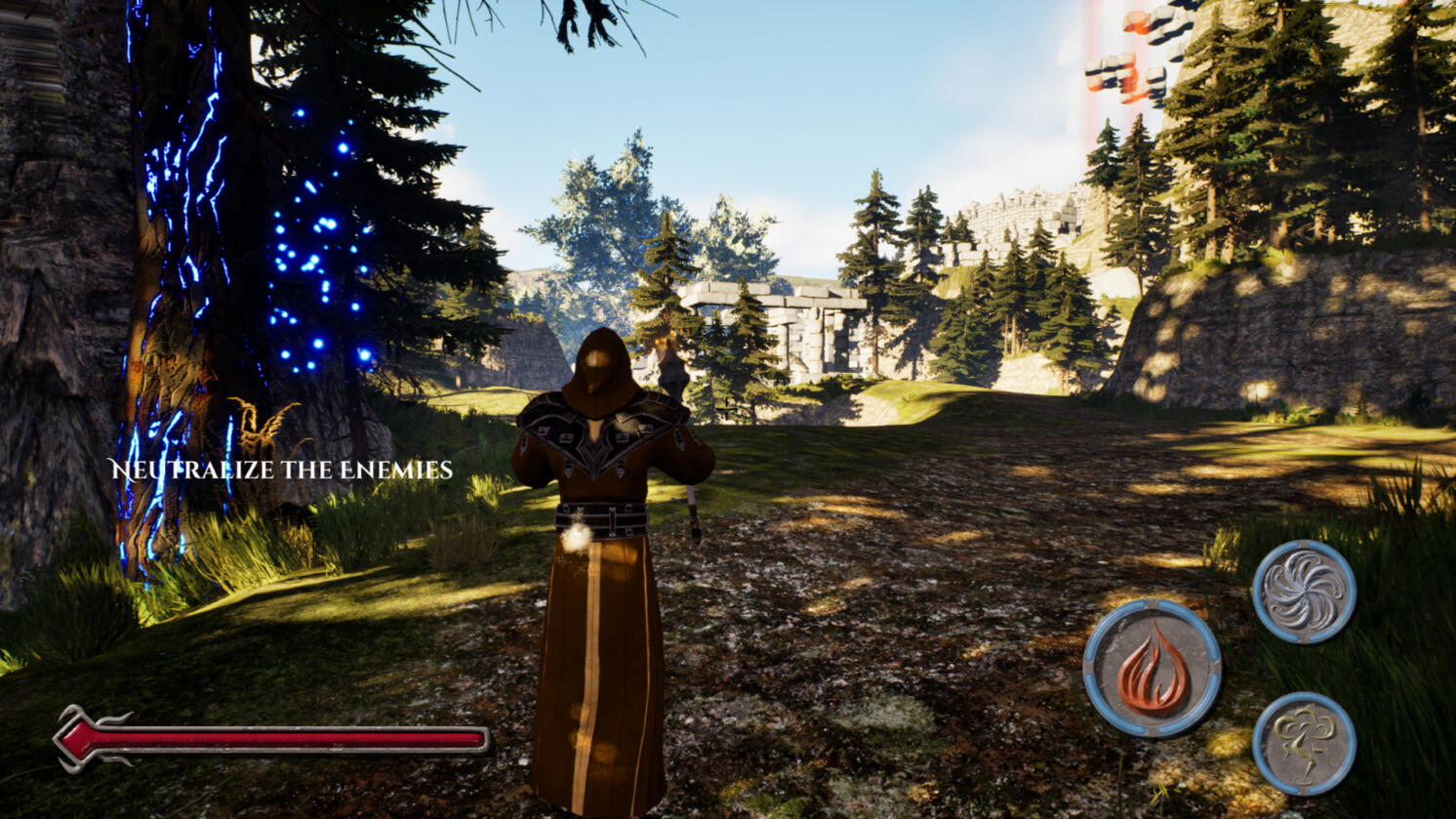
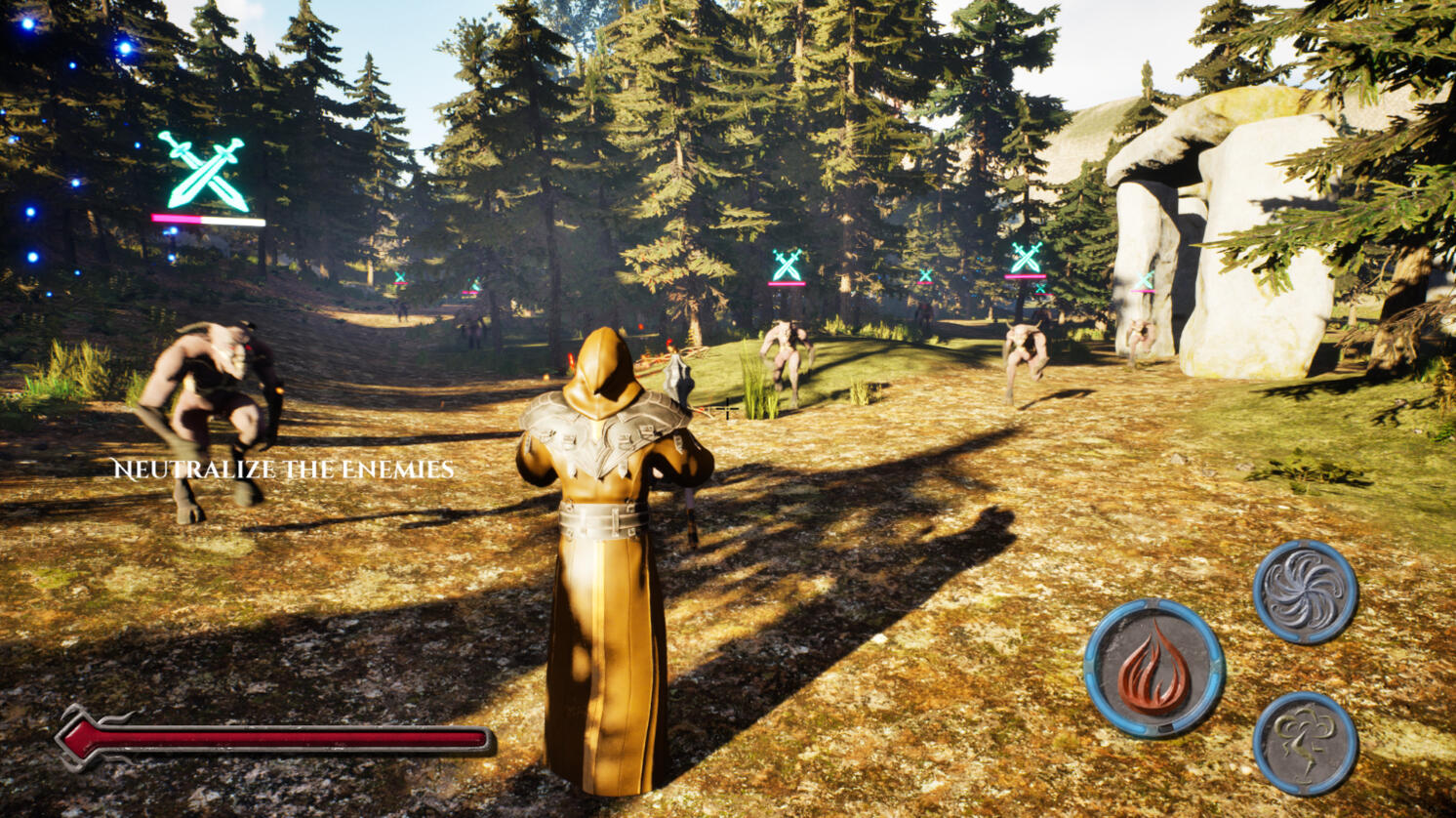
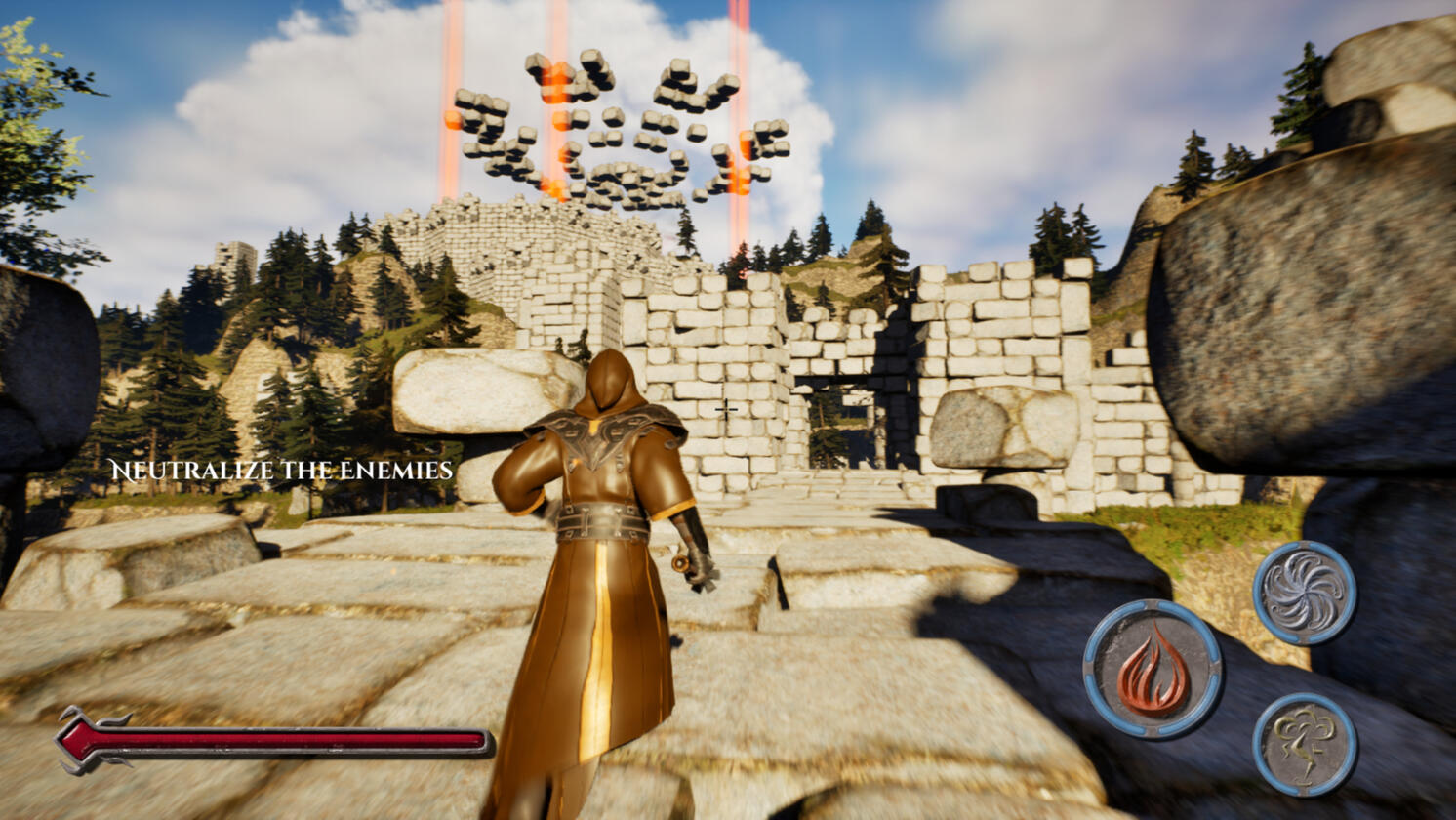
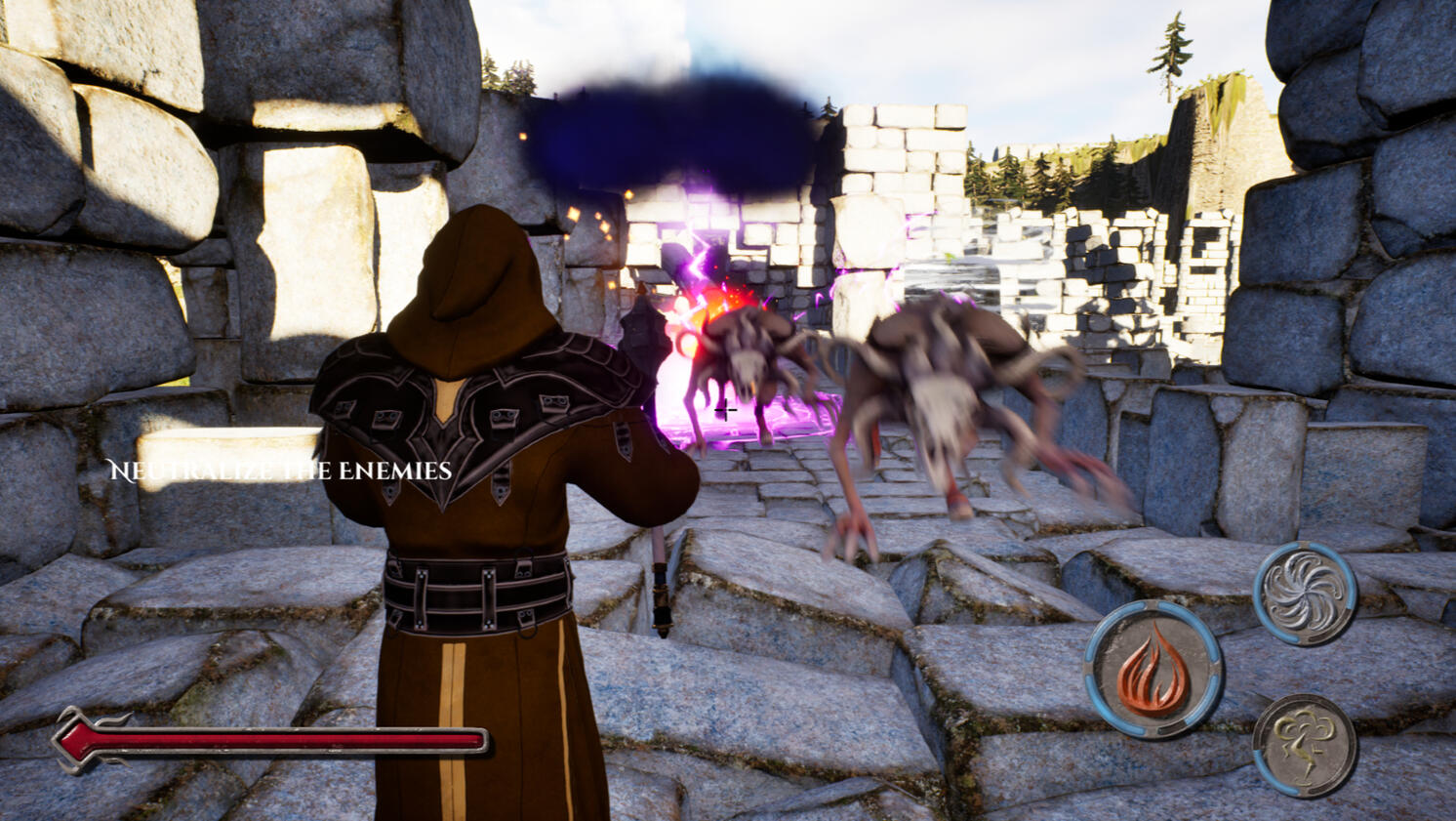
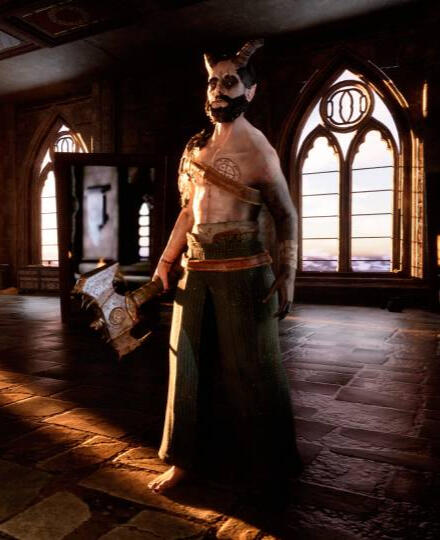
Game project 3 in FuturegamesHarbingers of New Dawn is a 4-player co-op (LAN) spell-casting shooter game set in a magical world overruled by dark arcane magic. Enter together as agents of an ancient magical task force, charged with a find and retrieve mission for a long lost enchanted artefact.
Roles
Game designer
Designed core gameplay systems, including a spell system with multiple abilities, each with distinct effects and roles in combat
Contributed to the technical design of player movement and multiplayer systems, defining requirements to support smooth and scalable co-op gameplay in Unreal Engine 5
Implemented audio elements, creating and integrating sound effects and music to enhance gameplay feedback and overall player experience
Project Background
Category: 4 Player Coop
7 weeks
15 People
Made in UE5
Game jams
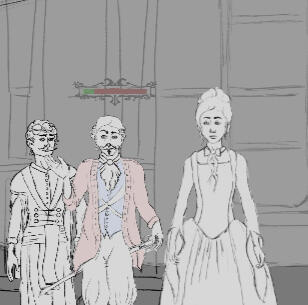
Ostatnia Zemsta
Plantasite
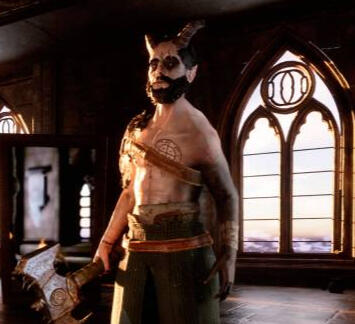
Mirrored Fate
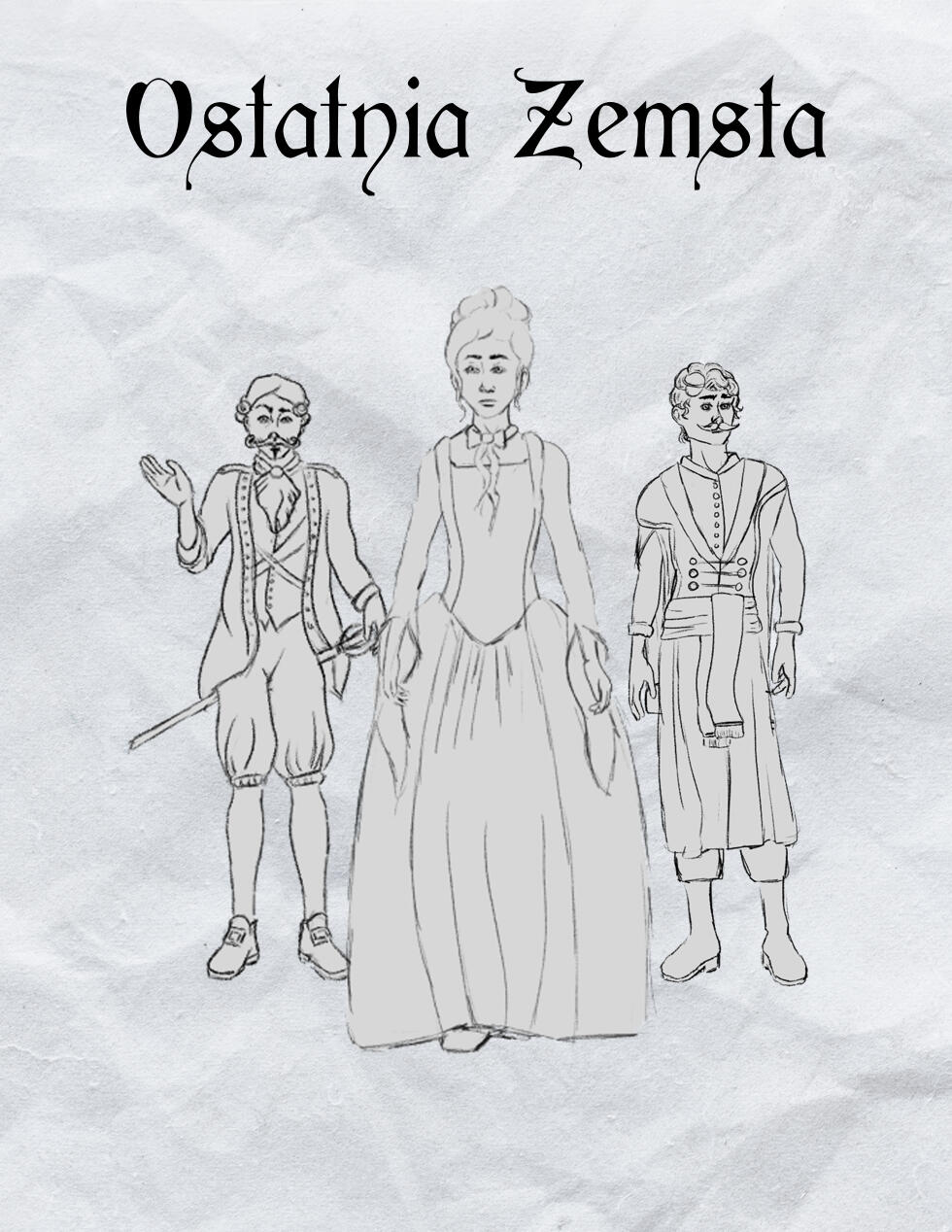
Ostatnia Zemsta
Description
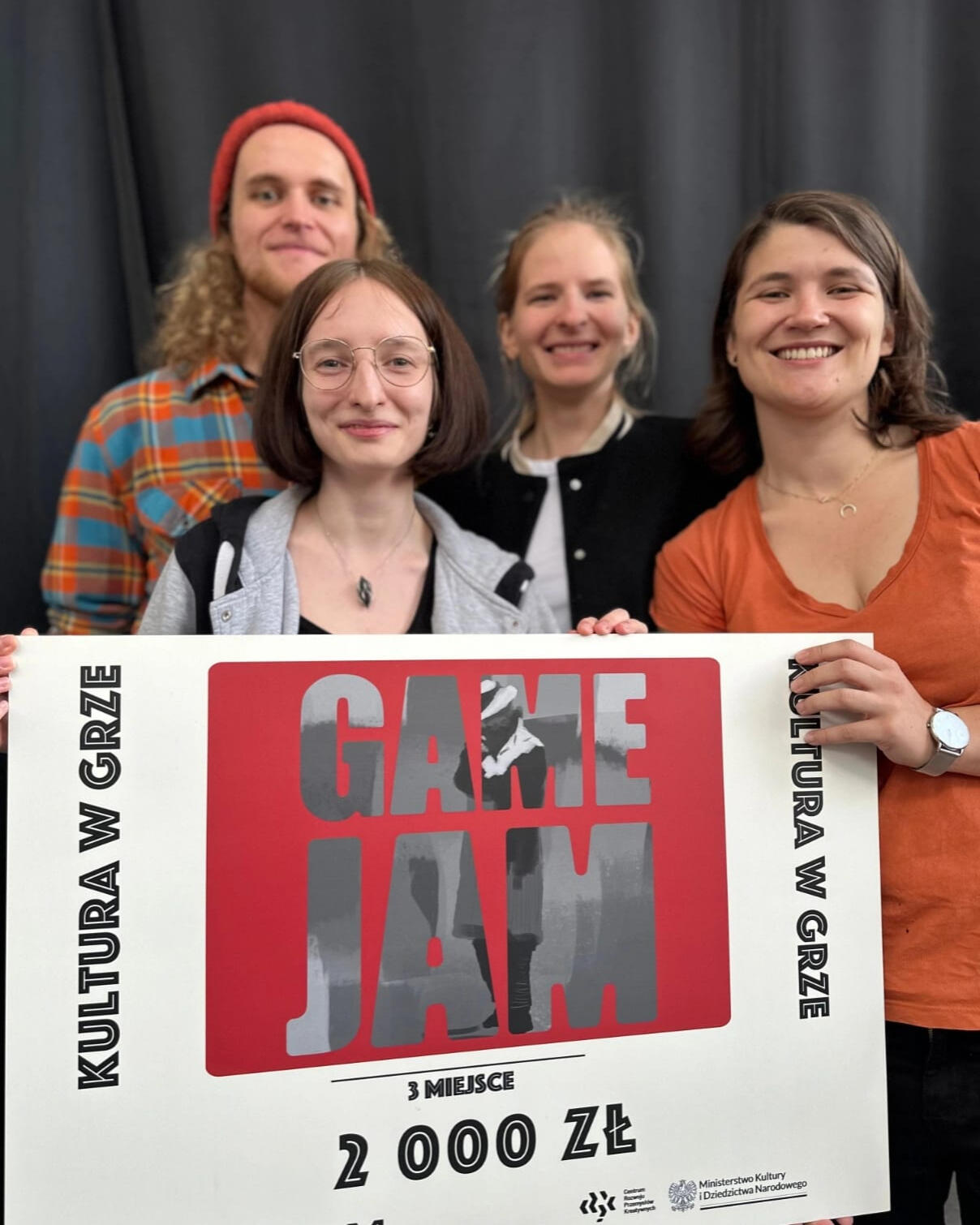
Game Jam KULTURA W GRZE
3rd place AwardedOstatnia Zemsta centers around the story which takes place in of polish classic by Aleksander Fredro Zemsta. The focus is the three impossible tasks given by the character Klara to Papkin in order to secure her hand in marriage.
Roles
Game Designer
I worked on the design of mechanics and levels.
I did the narrative adaptation for the context of the game.
I designed the UX/UI.
C# Programmer
Implementation of the game features in unity.
Project Background
Theme: Zemsta by Aleksander Fredro
48 hours
4 People
Made in Unity
Plantasite
Description
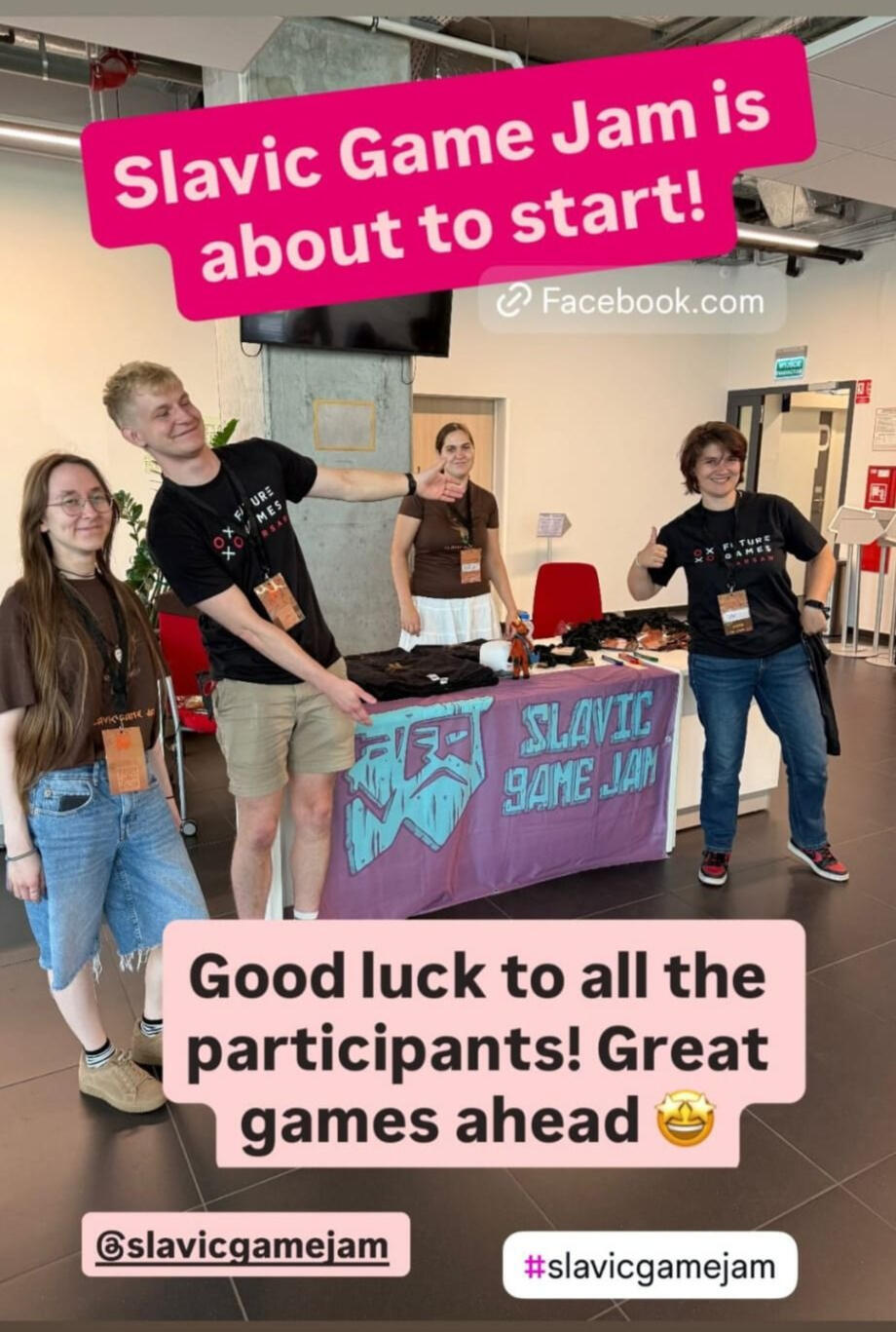
Slavic Game Jam 2025
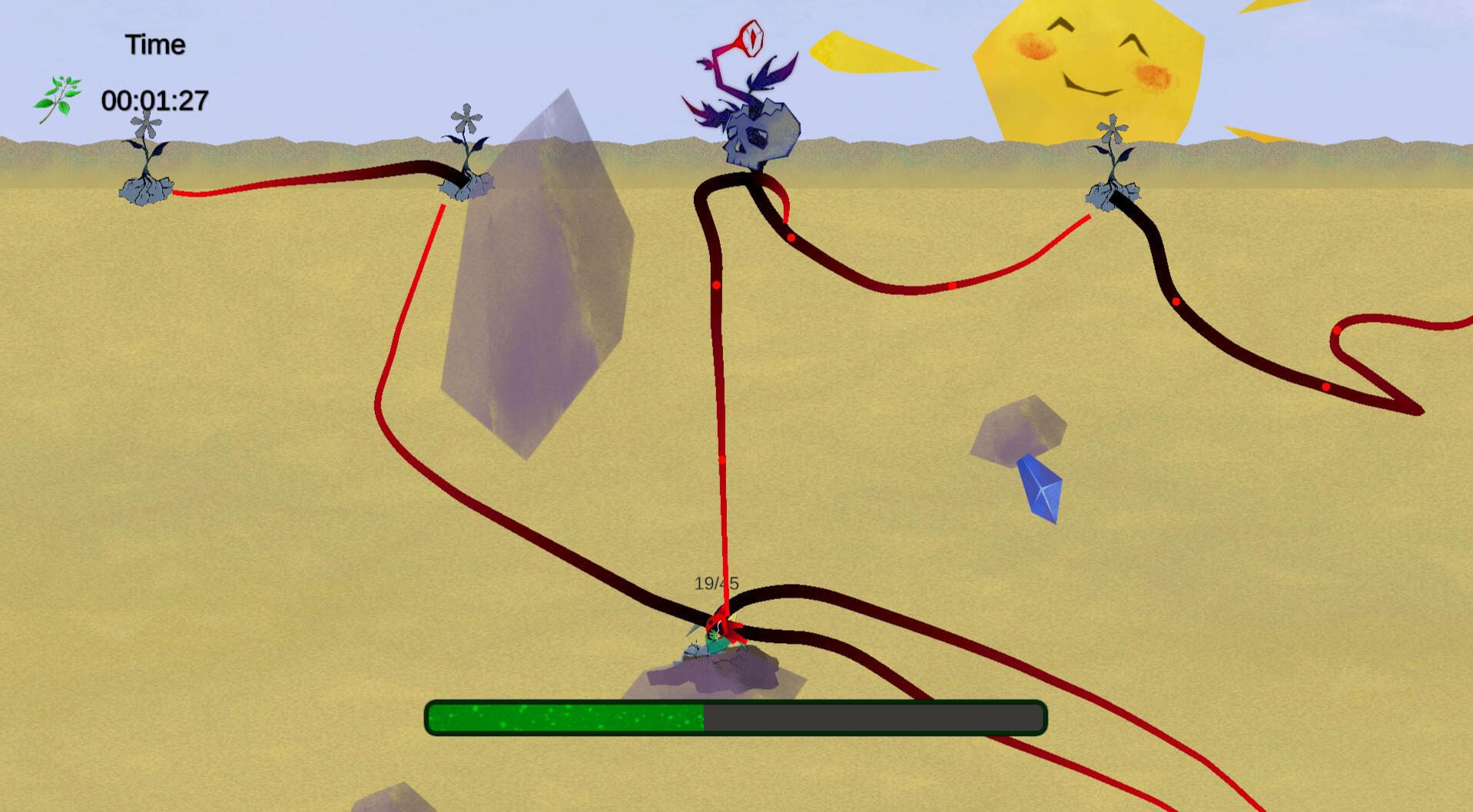
Theme: SymbiosysBecome the Plantaside (plant/parasite) that will corrupt and feed on a healthy, happy ecosystem.
Connect plant roots to other plants creating a network of resource suction.
Roles
Designed the main level, defining its layout, pacing, and overall player flow.
Developed and implemented core mechanics, including the plant-root connection system.
Created custom Unity shaders and materials to generate the colored root lines and ensure they updated dynamically during gameplay.
Balanced gameplay systems, adjusting values for difficulty, timing, and player feedback to create a smooth and engaging experience.
Integrated programmer scripts and artist assets within Unity, organizing the scene and ensuring all systems worked together cohesively.
Project Background
48 hours
5 People
Made in Unity
Mirrored Fate
Description
Edu Jam 2025
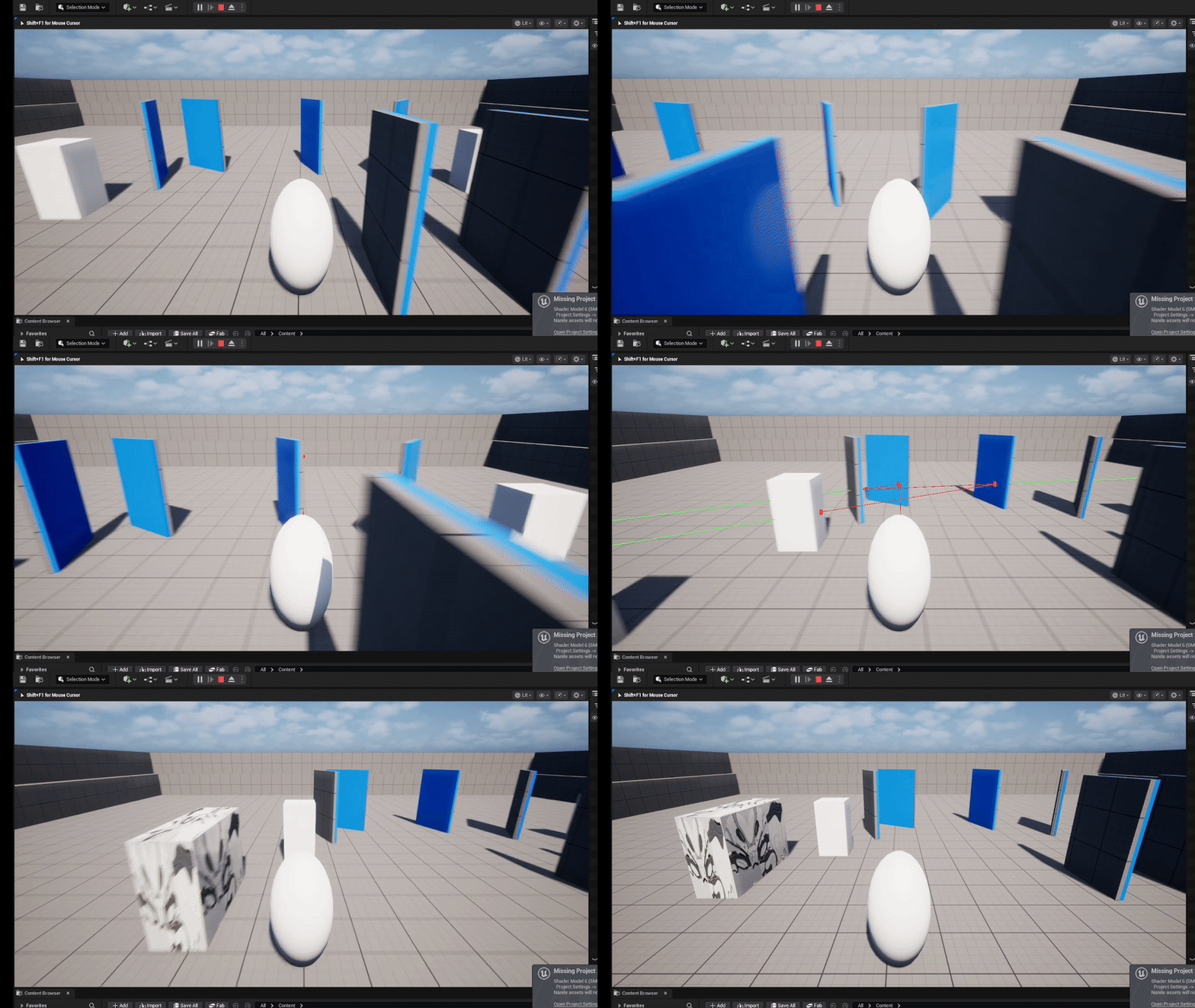
Theme: ReflectionPlay as a laser-wielding knight who must strategically fire beams into a sequence of mirrors to unlock doors and defeat enemies. Solve each laser puzzle and open the doors before enemies overwhelm you.
Roles
I implemented the reflecting laser system, ensuring the beam accurately bounced off mirrors and activated door switches when aligned at the correct angles.
I developed the laser’s interaction with enemies, allowing it to damage and eliminate them on impact.
Project Background
48 hours
4 People
Made in Unreal Engine 5.6
Poop Cat -The card game
AI Behavior Sytem Design
1. Overview
This case study presents the design of a systemic NPC behavior built for a stealth-focused infiltration game, where the player enters populated spaces to abduct targets without triggering a full-scale alert state.The featured archetype is a Restaurant Waiter, a semi-civilian NPC operating within a dense, socially active environment. The waiter can function both as:- A potential target- A witness- A dynamic escalation trigger within the stealth loopThe goal of this design is to demonstrate systemic AI thinking, spatial awareness logic, and escalation behaviors that create emergent stealth gameplay.
2. Core System
2.1 Routine state
The Waiter archetype operates on a time-based routine system composed of two macro states: Night Shift (Work) and Day Shift (Off-Duty).During the night shift, the NPC follows a structured service loop inside the restaurant, navigating between tables, counter, kitchen access, and designated staff areas. This predictable but variable routine establishes environmental believability while creating exploitable stealth windows for the player.During the day shift, the NPC transitions to an off-duty state and exits the playable space, reducing systemic load and reinforcing world consistency.The goal of this routine design is to:- Establish spatial predictability without full determinism- Anchor the NPC to meaningful workplace zones- Create isolation opportunities (e.g., smoke break, back-of-house routes)Support suspicion and escalation systems layered on top of baseline behaviorThe following diagram outlines the high-level service loop and location breakdown used during the Night Shift.
System Layers
Layer 1 – Time-of-Day Controller (Macro State)
The Time-of-Day Controller governs macro transitions between Night Shift (active work behavior) and Day Shift (off-duty state).Night Shift activates the Work State and enables task-driven logic within the restaurant environment.
Day Shift transitions the NPC out of the playable space, reinforcing world consistency and reducing systemic overhead.
Prototype code name "Steven 2"
Overview
I have been working in a new prototype, kind of a sequel from Steven. The objective was to keep the steven core of a crowd type, but i wanted to explore a new 3D perspective for this. I am leaning as an inpiration Risk of Rain 2, as it has an amzing design. I really apreciate the camera perspective.
Camera Design
Interaction System